
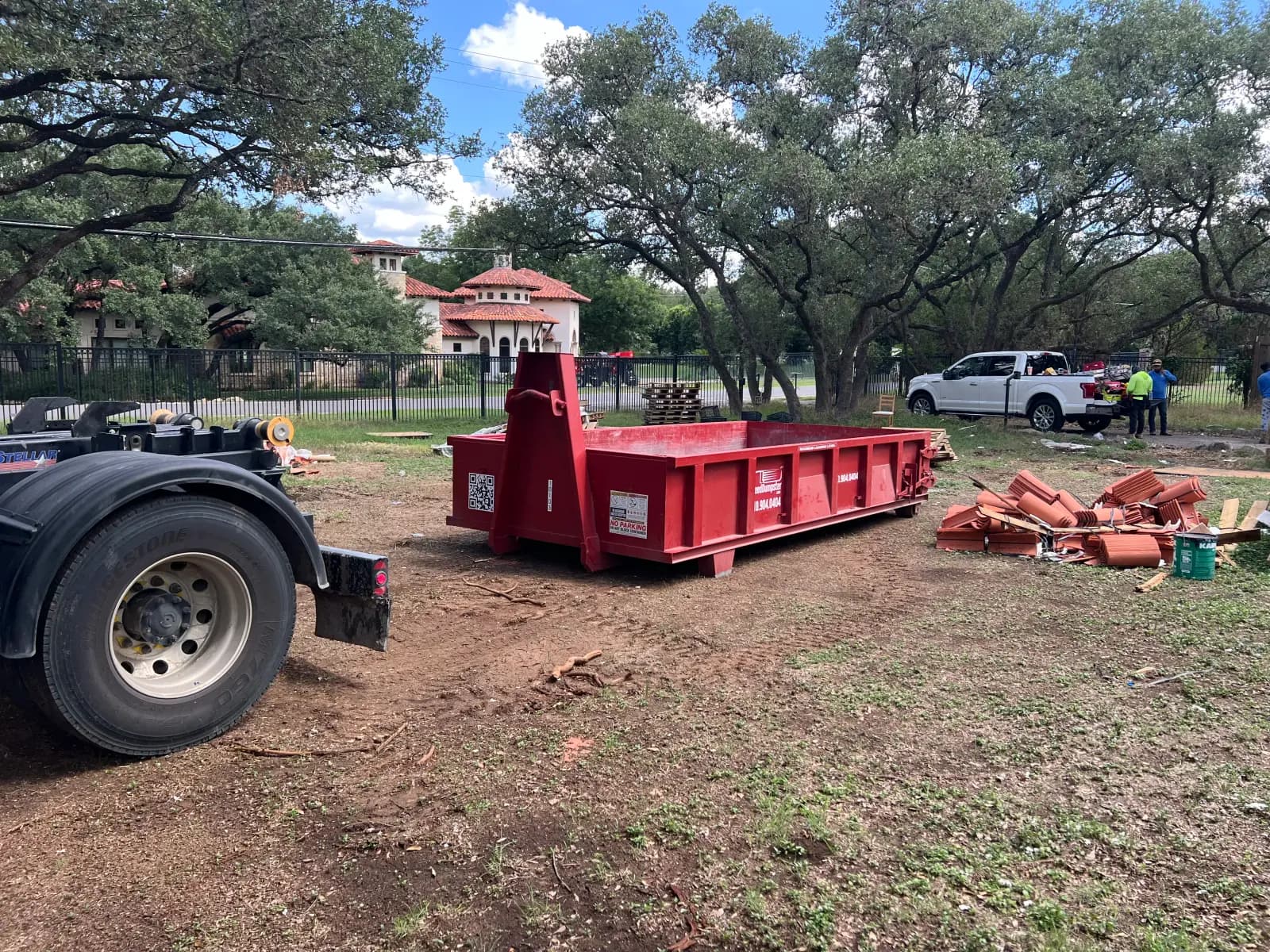
Construction and renovation projects can generate a surprising amount of debris. Drywall, lumber, flooring, cabinets, roofing materials, concrete, tile, and packaging can quickly pile up around a job site.
If you're working on a project in Southwest San Antonio, having a disposal plan before demolition or construction begins can save time, reduce clutter, and help keep the work area organized.
This guide explains how construction debris disposal in Southwest San Antonio works, which materials commonly require a dumpster, what types of waste may need special handling, and how to choose the right container for your project.
What Is Construction Debris?
Construction debris, sometimes called construction and demolition waste, includes materials generated during building, remodeling, repair, demolition, roofing, landscaping, and property improvement projects.
Common examples include:
Drywall
Wood and lumber
Flooring
Cabinets
Doors
Trim and molding
Roofing materials
Tile
Brick
Concrete
Fixtures
Packaging materials
General remodeling debris
The amount and weight of this material can vary dramatically depending on the project.
A bathroom renovation may generate a few cubic yards of debris, while a major remodel or construction project can require a much larger container.
Why Construction Debris Needs a Disposal Plan
Debris can accumulate quickly once demolition begins.
Without a designated container, materials may end up scattered around the driveway, yard, garage, or job site. That can make it harder for contractors and homeowners to move around the property and continue working efficiently.
A roll-off dumpster creates one centralized place for acceptable construction debris.
Instead of repeatedly loading a pickup truck or trailer and making disposal trips, debris can be placed directly into the dumpster as the project progresses.
For projects in the area, I Need Dumpster provides dumpster rental in Southwest San Antonio for residential and commercial cleanup needs.
What Construction Materials Can Go in a Dumpster?
The exact materials accepted can depend on the dumpster type, debris weight, and project requirements.
Many common construction and remodeling projects generate materials such as:
Drywall and sheetrock
Wood and lumber
Old cabinets
Doors and trim
Flooring materials
Non-hazardous remodeling debris
Roofing materials
General construction waste
Before loading a dumpster, always confirm that your specific material is appropriate for the container you are renting.
Different types of debris may have different weight limits or disposal requirements.
What About Concrete, Dirt, Brick, Stone, and Tile?
Heavy materials require special attention because weight becomes more important than volume.
A dumpster filled with concrete can reach its weight limit long before the container looks full.
Dense materials may include:
Concrete
Dirt and soil
Brick
Gravel
Stone
Tile
For projects involving dense debris, I Need Dumpster offers a 10-yard heavy-duty dumpster.
Using a smaller container designed for heavy material helps manage the weight of the load and makes transportation safer and more practical.
What Should Not Be Put in a Construction Dumpster?
A construction dumpster should not be treated as a container for every type of waste.
Some materials may be prohibited, restricted, or require special handling depending on local disposal regulations and the dumpster rental agreement.
Examples of materials that should always be confirmed before disposal include:
Hazardous chemicals
Paints and solvents
Automotive fluids
Batteries
Refrigerants
Certain appliances
Tires
Fuel or other flammable liquids
Other hazardous materials
If you are unsure about a specific item, contact I Need Dumpster before placing it inside the container.
You can also review the dumpster rental agreement for additional information about rental and disposal requirements.
Construction Debris From Home Renovations
Home renovations are one of the most common reasons to rent a dumpster.
Projects such as kitchen remodels, bathroom renovations, flooring replacement, room additions, and whole-home renovations can generate debris throughout the entire project.
Common renovation debris may include:
Cabinets
Countertops
Drywall
Flooring
Wood
Fixtures
Doors
Trim
Packaging
General demolition debris
Keeping a dumpster on-site gives contractors and homeowners somewhere to place acceptable debris immediately instead of allowing it to accumulate around the property.
For more information, explore dumpster rental for home renovation projects.
Construction Debris From Roofing Projects
Roof replacement can produce a large amount of debris in a short period of time.
Old roofing materials need to be removed as the new roof is installed, making an on-site container especially useful.
A dumpster can help contractors keep roofing debris contained and reduce the amount of material left around the property.
Because roofing materials can be heavy, choosing the correct container and understanding weight limits is important.
Learn more about roofing dumpster rental before starting your project.
Dumpster Rental for New Construction
New construction generates waste at almost every stage of the project.
Packaging, wood scraps, drywall, trim, flooring materials, and other construction debris can quickly accumulate on a job site.
Having a dumpster available gives crews a central location for acceptable waste and can help keep work areas more organized.
Contractors managing projects in Southwest San Antonio can also review I Need Dumpster's new construction dumpster rental options.
What Size Dumpster Do You Need for Construction Debris?
The best dumpster size depends on the size of the project, the type of material, and the total weight of the debris.
I Need Dumpster offers several roll-off dumpster sizes for different types of projects.
10-Yard Dumpster
A 10-yard dumpster may work well for smaller remodeling projects, bathroom renovations, garage cleanups, and other jobs that generate a moderate amount of debris.
15-Yard Dumpster
A 15-yard dumpster provides additional capacity for projects such as flooring replacement, kitchen remodeling, property cleanouts, and medium-sized renovations.
20-Yard Dumpster
A 20-yard dumpster can be a good option for larger renovation projects, construction work, property cleanouts, and projects that would otherwise require several truckloads of debris.
30-Yard Dumpster
A 30-yard dumpster provides additional capacity for major renovation projects, commercial construction, large property cleanouts, and substantial construction jobs.
10-Yard Heavy-Duty Dumpster
For concrete, dirt, gravel, brick, stone, tile, and other dense materials, a 10-yard heavy-duty dumpster may be the more appropriate option.
Always consider both volume and weight when choosing a dumpster for construction debris.
How Much Does a Construction Dumpster Cost?
Construction dumpster pricing can depend on several factors, including:
Dumpster size
Type of debris
Weight of the material
Rental period
Delivery location
Additional service requirements
A larger dumpster is not automatically the best option if your project involves extremely heavy materials.
Before ordering, review the available dumpster sizes and pricing to compare your options.
Dumpster Rental for Contractors in Southwest San Antonio
Contractors often require a different type of disposal solution than homeowners because debris is generated continuously throughout a project.
A roll-off dumpster can support:
New home construction
Commercial renovations
Residential remodeling
Roof replacement
Demolition
Landscaping
Property restoration
Tenant improvements
Rather than stopping work to make repeated disposal runs, crews can place acceptable debris into a container at the job site.
Professional contractors can also explore the I Need Dumpster Contractor Program.
How to Prepare for Construction Dumpster Delivery
Planning where the dumpster will be placed before delivery can make the rental process easier.
Choose an Accessible Location
The delivery area should provide enough room for the truck to safely place and retrieve the container.
Clear the Delivery Area
Remove vehicles, equipment, building materials, and other obstacles from the intended dumpster location.
Think About the Workflow
Place the container somewhere that makes it convenient for workers to dispose of debris without interfering with normal access to the property.
Identify Your Materials Before Ordering
Knowing whether your project will produce general construction waste, roofing debris, concrete, dirt, or another heavy material can help determine which dumpster you need.
How to Avoid Overloading a Construction Dumpster
Construction debris can be much heavier than normal household junk.
To reduce the risk of an overweight load:
Choose the correct dumpster for your debris type
Do not assume a larger dumpster is appropriate for heavy materials
Keep debris within the container's fill limits
Ask about weight allowances before ordering
Confirm how dense materials should be loaded
If you are uncertain about the amount or weight of your debris, contact I Need Dumpster before choosing a container.
Frequently Asked Questions
Can I rent a construction dumpster in Southwest San Antonio?
Yes. I Need Dumpster provides dumpster rental service in Southwest San Antonio for residential, commercial, construction, roofing, renovation, and cleanup projects.
Can drywall go in a construction dumpster?
Drywall is a common type of remodeling and construction debris. Confirm your specific materials and project requirements when ordering your dumpster.
Can wood go in a construction dumpster?
Wood and lumber are common construction materials. Acceptance can depend on the type of material and the overall load, so confirm your debris when ordering.
Can concrete go in a dumpster?
Concrete is extremely dense and requires an appropriate container. I Need Dumpster offers a 10-yard heavy-duty dumpster for certain heavy-material projects.
Can dirt go in a dumpster?
Dirt is another dense material that requires special consideration. Use an appropriate heavy-duty container rather than assuming a standard large dumpster is suitable.
What size dumpster is best for remodeling?
The right size depends on the scope of the renovation. Smaller projects may work with a 10- or 15-yard dumpster, while larger renovations may require a 20- or 30-yard container.
Can contractors rent dumpsters for ongoing projects?
Yes. I Need Dumpster works with contractors and offers a Contractor Program for professional project needs.
Construction Debris Disposal in Southwest San Antonio Made Easier
Whether you're remodeling a home, replacing a roof, managing new construction, or cleaning up after demolition, construction debris needs somewhere to go.
Planning disposal before the project begins can help keep your job site organized and reduce the time spent moving waste away from the property.
The key is choosing the right container for both the volume and weight of your debris.
If your project is located in Southwest San Antonio, explore Southwest San Antonio dumpster rental options.
You can also compare dumpster sizes and pricing to determine which container is appropriate for your project.
Ready to start your project? Order your dumpster online.